Discover the Pasaje de Chinitas: the bohemian heart of Malaga’s historic center
In the heart of Malaga’s historic center, next to the Plaza de la Constitución, lies a small urban labyrinth that invites leisurely strolls and discovery: the Pasaje de Chinitas. Narrow, pedestrianized alleyways that seem to whisper of old flamenco gatherings, poetic verses, and artistic encounters from another era.
History, Origin, and Transformations
-
The passage was originally called Pasaje de Álvarez, in honor of Antonio María Álvarez, a businessman, former civil and military governor of Málaga, and the project’s promoter.
-
It was built on the grounds of the former convent of the Discalced Augustinian Nuns, founded in the 17th century. When the order was secularized, its grounds were renovated and adapted, and part of the convent’s facade is preserved today as an entrance arch from the Plaza de la Constitución.
Over time, the fame of the Café de Chinitas, a café-theater located in the passageway, became so great that the street was permanently named after it.
Between 1857 and 1937, the Café de Chinitas was one of the great temples of flamenco and the artistic scene in Andalusia.
-
It closed permanently in 1937, during the Civil War.
-
In 2024, a symbolic reopening of Café de Chinitas took place in its original location, combining gastronomy, cocktails, and shows, with the intention of reviving the spirit of that legendary establishment.
What to see today and why stroll through the passage
-
As you enter through the arch from Plaza de la Constitución, you will pass under the portal that commemorates the old convent.
-
The layout of the passage is cruciform: it goes from Plaza de la Constitución to Calle Fresca, and also from Calle Santa María to what was once “Calle del Toril” (now Nicasio Calle). In the center, a small square serves as a crossing point and intimate viewpoint.
-
On Calle Santa María, you can continue your stroll to other nearby corners of the old town or end up in tapas areas like the atmosphere of El Quita Penas or traditional taverns.
-
The restored artistic paving, the architecture of old facades, wrought-iron lampposts, and the atmosphere at dusk—that cool breeze we call “la fresca” here—inspire nostalgia for centuries past.
-
It’s ideal to explore it at sunset or at night, when the warm lights highlight the walls and the silence invites you to imagine the sounds of guitars, applause, or conversations of yesteryear.
Illustrious figures and anecdotes that enrich the myth
-
Among the artists who frequented the Café de Chinitas were Juan Breva, Antonio Chacón, La Niña de los Peines, Manolo Caracol, El Cojo de Málaga, Vallejo and even names like La Argentinita, Vicente Aleixandre, Picasso, Salvador Dalí.
-
Federico García Lorca immortalized him with these verses:
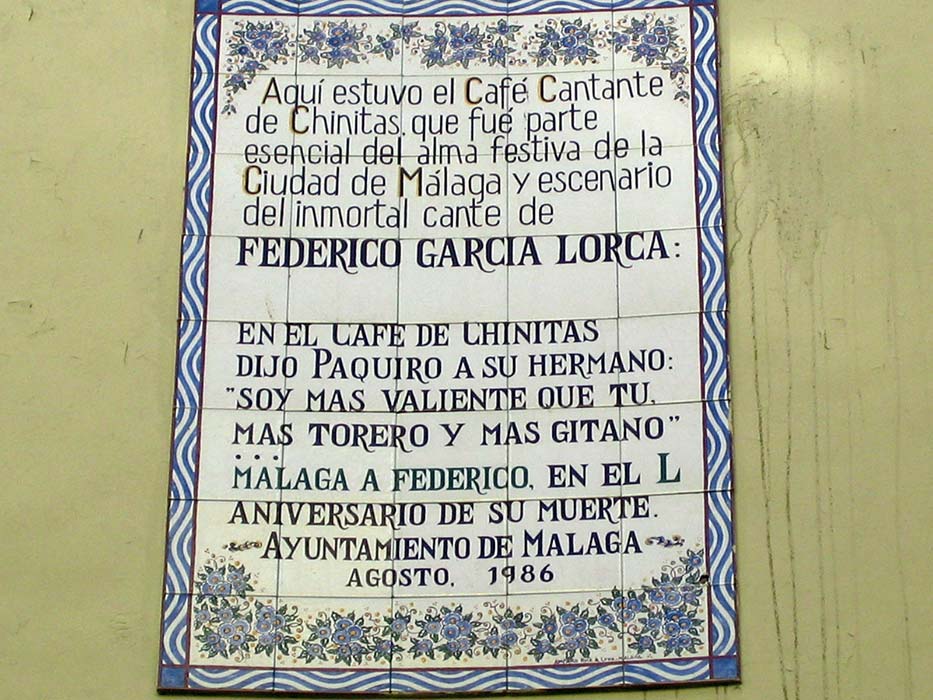
“In the Café de Chinitas, Paquiro said to his brother:
‘I am braver than you, a better bullfighter, and more of a Gypsy.’”
This poem greatly contributed to the literary prestige of the establishment. -
Local chronicles recount episodes of scandals, revelry, fights, and closure. legal issues. At times, the café was considered a brothel in disguise.
-
During the reopening in 2024, the comedian El Morta participated in the presentation, reciting Lorca’s verses. Málaga Hoy
-
It has also been said that
The 2024 reopening aims to recapture the bohemian spirit: the venue maintains original columns from the old convent and combines gastronomy with performing arts.
A curious anecdote: it is said that one day a visitor from Madrid brought a ham for Chiquito as a surprise gift, which caused joy and laughter in that “temple of the artist.” EL ESPAÑOL
Roughly speaking…
In the heart of Málaga’s historic center, just steps from the iconic Plaza de la Constitución, lies one of the corners with the most Málaga charm: the Pasaje de Chinitas. This intimate pedestrian passageway, steeped in history, art, and legend, invites visitors to delve into centuries of music, poetry, and bohemian life.
Built in the 19th century on the site of the former Convent of the Discalced Augustinian Nuns, the passageway retains its original entrance from the Plaza. The cruciform design of the passage connects four streets: Santa María, Fresca, Nicasio Calle, and the Plaza de la Constitución itself, converging in a small interior plaza.
The name “Chinitas” originates from a dramatic actor nicknamed Chinitas, who performed at the venue that later became famous. Although initially called Pasaje de Álvarez (in honor of its promoter, Antonio María Álvarez), it was the prestige of the café-theater that led to its current name.
From 1857 to 1937, the Café de Chinitas was a cultural epicenter: flamenco, poetry, literary gatherings, and all kinds of performances converged there. Today, after decades of being closed, it has been reborn with renewed energy: Andalusian cuisine, creative cocktails, and live artistic performances, all in a restored setting that pays tribute to its past.
Strolling through the passage at dusk, when golden lights illuminate the stones, is to embrace the Málaga of bygone days. The walls evoke melodies by Juan Breva, Antonio Chacón, La Niña de los Peines, or the visits of Lorca, Picasso, Dalí, Vicente Aleixandre… and the statue in homage to Lorca now presides over the bar as a silent guardian of memory.
Come and rediscover the bohemian heart of Málaga! The Pasaje de Chinitas awaits you with history, melody, and latent emotion within its centuries-old walls.